One live stock view for a six-branch garment retailer
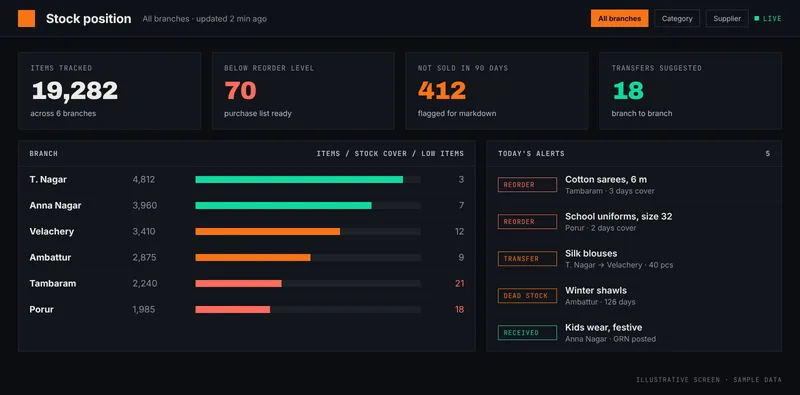
Six branches, six Tally files and a weekly Excel sheet. How one live stock position, reorder alerts and branch transfers replace the Monday phone calls.
Read the case study →Four problems we are asked about most often by shop owners and factory owners, and how we would solve each one: what the business looks like today, what we build, and what changes on a normal working day. Every one keeps the Tally, SAP Business One or Excel the business already runs on.
About these case studies. They are worked examples, built from the kind of operations we work in. The businesses described are composites and are not named clients, the screens show sample data, and we quote no result figures we cannot source.
Six branches, six Tally files and a weekly Excel sheet. How one live stock position, reorder alerts and branch transfers replace the Monday phone calls.
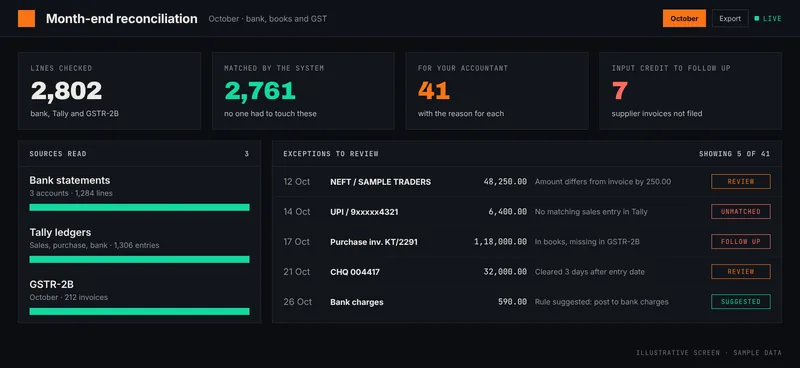
Read the case study →Bank statements, Tally ledgers and GSTR-2B matched by the system. The accounts team reviews a short list of exceptions instead of ticking thousands of lines.
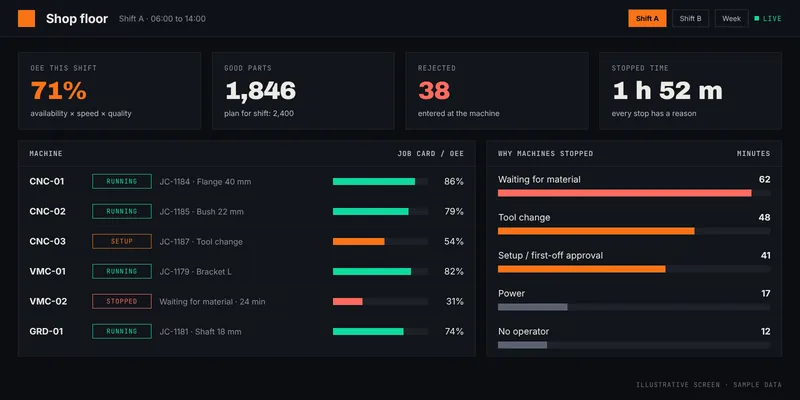
Read the case study →A machine shop that learns about yesterday's production the next morning. Tablet job cards at each machine give the owner live output, rejects and a reason for every stop.
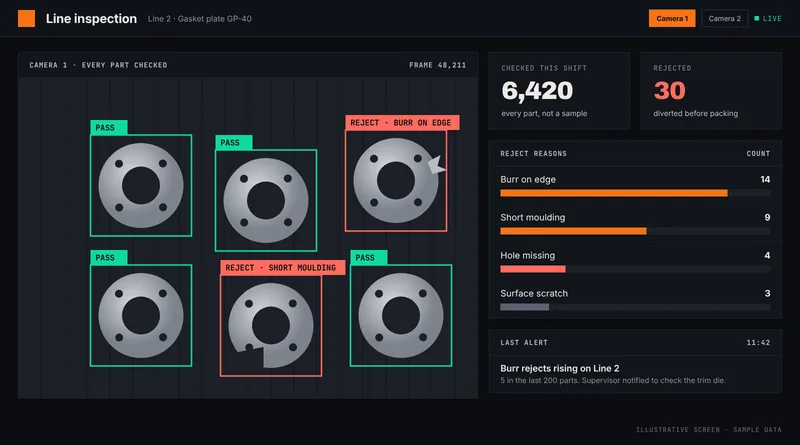
Read the case study →Sampling one part in fifty lets defects reach the customer. A camera over the line, trained on the plant's own parts, checks every piece and tells the supervisor when rejects start rising.
Read the case study →These four are the most common starting points, and they are rarely the whole picture. The first step on every engagement is two to four days inside your shop or plant, so the scope comes from what we see there.
Read more about AI and software for retail, manufacturing software and factory AI and custom ERP and business software, or see how an engagement runs.
Thirty minutes on a call is usually enough to tell whether there is something worth building together. The call is free, and we respond within one business day.