01
Statement and ledger import
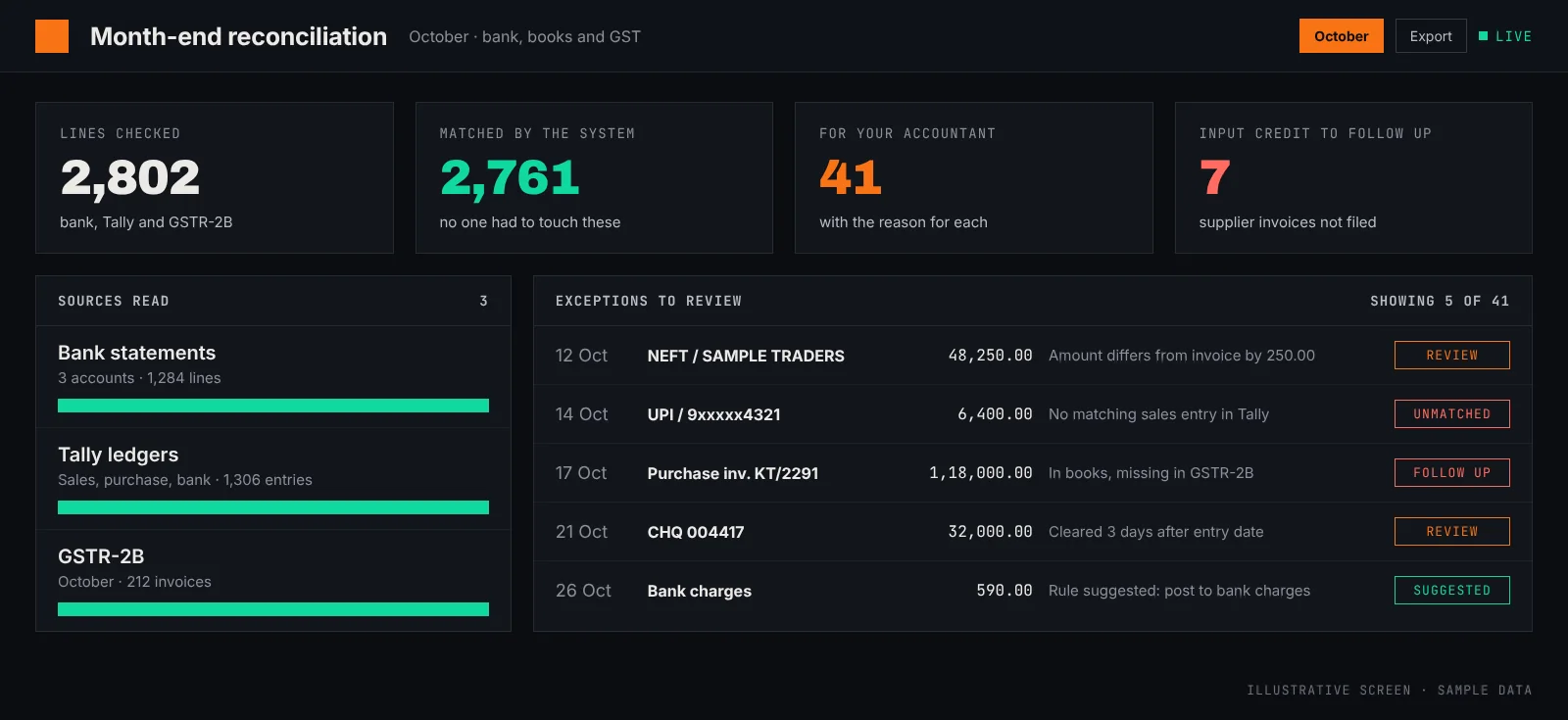
Bank statements, Tally ledgers and GSTR-2B are read automatically. Where the bank offers a connection we use it, and where it does not, the downloaded file is dropped into a folder.
A hardware and building-materials retailer with four outlets closes its books in Tally. Every month, two people in accounts spend most of a week matching bank statements to ledgers and purchase invoices to GSTR-2B, line by line, in Excel. This is how we would turn that week into a review of exceptions.
About this case study. This is a worked example, built from the kind of operation we work in. The business described is a composite and is not a named client, the screens show sample data, and we quote no result figures we cannot source. The commitments at the foot of the page are the ones that hold on every engagement.
The work is the same every month. Download statements from three banks. Export ledgers from Tally. Download GSTR-2B. Then match by amount, date and party name, with a pencil and a highlighter, until the differences are small enough to explain.
Most lines match without any judgement. The value of the accounts team is in the few dozen that do not: a customer who paid short, a supplier who has not filed, a cheque entered twice. Those are the lines that get the least attention, because the week runs out.
The owner sees the result two weeks into the next month, which is too late to chase a supplier for input credit or a customer for a short payment.
The exact scope is fixed after two to four days on site. For an operation like this one, it usually comes down to these parts.
Bank statements, Tally ledgers and GSTR-2B are read automatically. Where the bank offers a connection we use it, and where it does not, the downloaded file is dropped into a folder.
Lines are matched on amount, date window, reference number and party name, including the spelling differences between a bank narration and a ledger name.
Everything unmatched is shown with the reason: amount differs, no entry in books, in books but missing in GSTR-2B, duplicate.
When the accountant clears a recurring item, such as bank charges, the system offers to handle it the same way next month.
Purchase invoices that are in the books but missing from GSTR-2B are listed by supplier, ready to send as a reminder.
A summary for the owner: what matched, what is open, and what is owed, available during the month and at close.
| Today | With the system | |
|---|---|---|
| Matching bank to books | Line by line in Excel | Done by the system, every day |
| The accountant's time | Spent ticking lines that match | Spent on the lines that do not |
| Suppliers who have not filed | Found at filing time | Listed as soon as GSTR-2B is available |
| Owner's view of the month | Two weeks after it ends | Open items visible during the month |
| Who signs off | The accountant | Still the accountant |
The same stages on every engagement. The full walk-through is on the How We Work page, and the wider service is described under Custom ERP and business software.
| Discovery call | 30 min, free |
|---|---|
| Days on your floor before a proposal | 2–4 |
| Scope, timeline and price | Fixed |
| First working demo on your data | Week 1 |
| Typical time to production | Weeks 6–12 |
| Existing systems replaced | Zero |
Only if you want it to. By default it prepares the matches and the suggested entries, and your accountant approves them before anything is posted.
Yes. The whole system can run on a server in your premises, so bank and GST data never leave the building. Cloud deployment is available if you prefer it.
Yes. The matching logic is the same, and the ledgers are read from SAP Business One through its service layer.
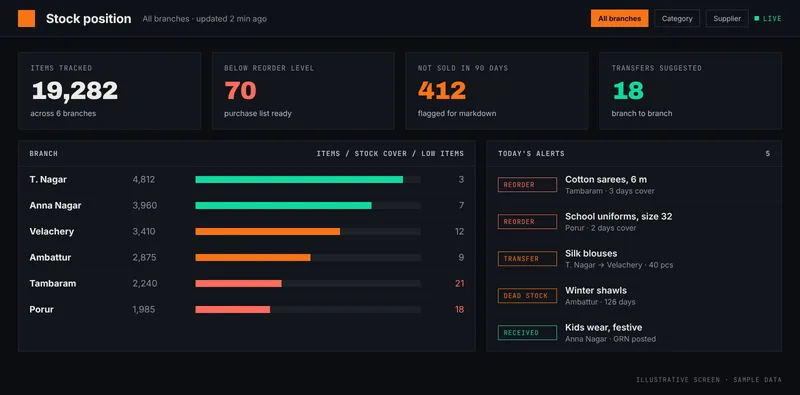
Six branches, six Tally files and a weekly Excel sheet. How one live stock position, reorder alerts and branch transfers replace the Monday phone calls.
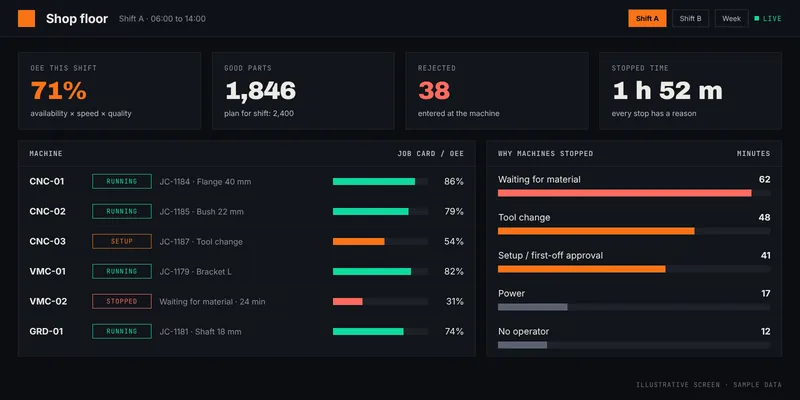
Read the case study →A machine shop that learns about yesterday's production the next morning. Tablet job cards at each machine give the owner live output, rejects and a reason for every stop.
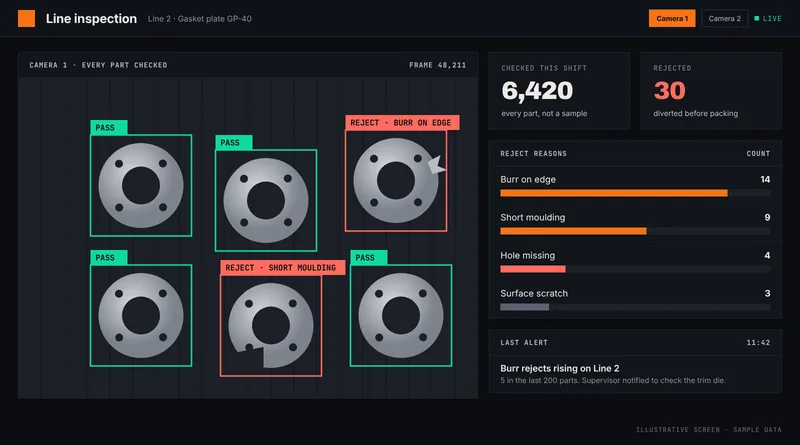
Read the case study →Sampling one part in fifty lets defects reach the customer. A camera over the line, trained on the plant's own parts, checks every piece and tells the supervisor when rejects start rising.
Read the case study →Tell us what your week looks like. Thirty minutes on a call is usually enough to tell whether there is something worth building together. The call is free, and we respond within one business day.