01
Camera and lighting on the line
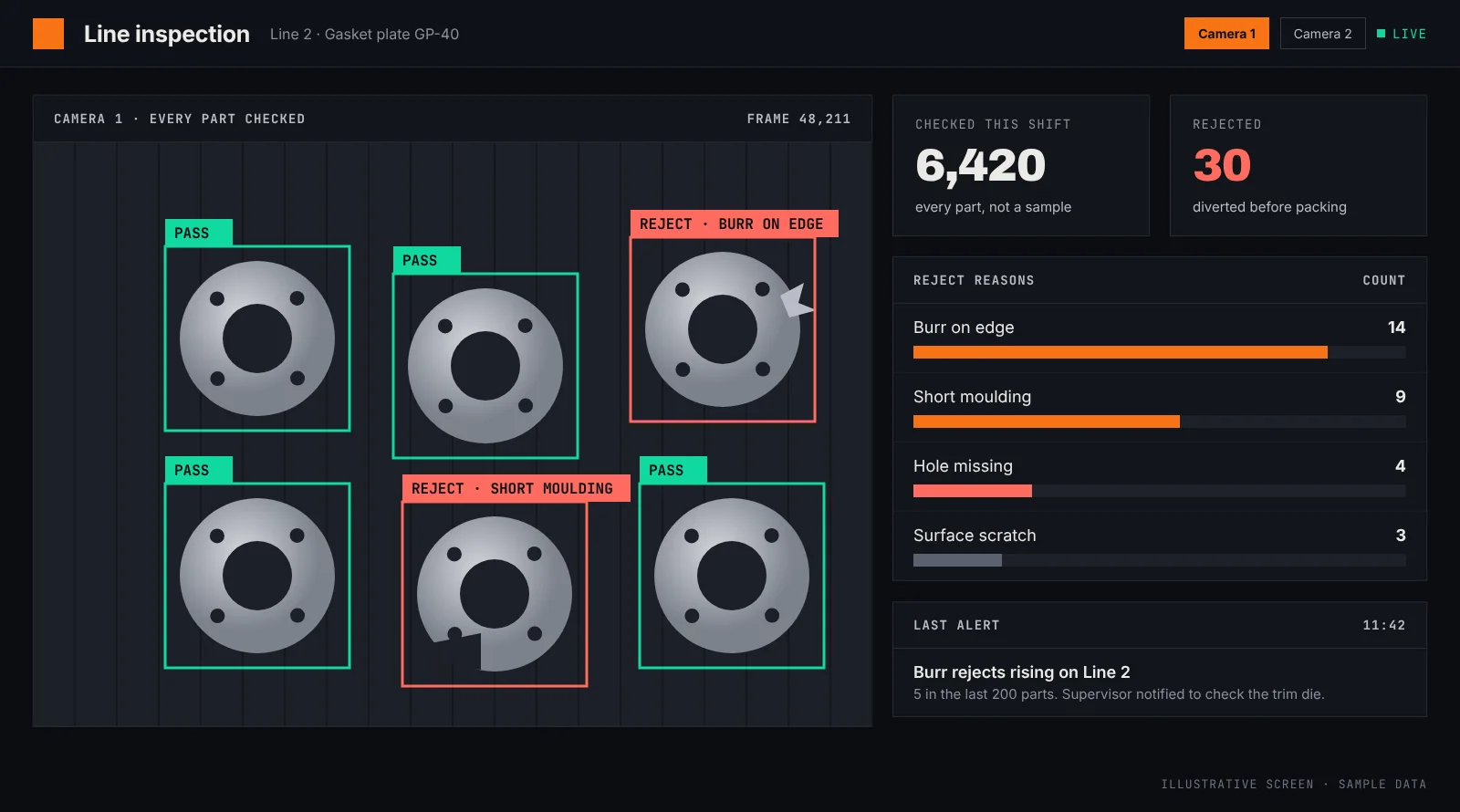
An industrial camera and controlled lighting over the conveyor, with a small computer beside the line. Nothing on the machine is changed.
A manufacturer of moulded and trimmed parts supplies automotive customers from a plant near Sriperumbudur. Quality is checked by pulling parts from the line to a sample table. Most defects are caught, but some reach the customer, and each complaint costs a sorting visit. This is how we would check every part on the line with a camera.
About this case study. This is a worked example, built from the kind of operation we work in. The business described is a composite and is not a named client, the screens show sample data, and we quote no result figures we cannot source. The commitments at the foot of the page are the ones that hold on every engagement.
An inspector checks a sample from every batch against a limit board. The check is careful, but it covers a small share of what the line produces, and it happens after the parts are made.
When a trim die starts to wear, burrs appear slowly. The sample table notices some hours later. In between, the line has produced parts that will be sorted by hand, or found by the customer.
The inspectors know every defect by sight. That knowledge is exactly what a vision system needs, and it is the starting point of the work.
The exact scope is fixed after two to four days on site. For an operation like this one, it usually comes down to these parts.
An industrial camera and controlled lighting over the conveyor, with a small computer beside the line. Nothing on the machine is changed.
We photograph good and defective parts from your own production, and your inspectors label the defects: burr, short moulding, missing hole, surface scratch.
Each part is checked as it passes. Rejects trigger a light, a buzzer or a diverter, depending on what the line allows.
Every reject is saved with its picture and reason, so the quality head sees which defect is rising and on which line.
When one defect type crosses a set rate, the supervisor is notified to check the tool before a full batch is lost.
The system first runs beside the sample table, and its decisions are compared with the inspectors' until the plant is satisfied.
| Today | With the system | |
|---|---|---|
| How many parts are checked | A sample from each batch | Every part on the line |
| When a defect is seen | At the sample table, after the batch | As the part passes the camera |
| Tool wear | Noticed when rejects pile up | Flagged when one defect starts rising |
| Record of rejects | Tally marks on paper | Picture, reason, time and line |
| Inspectors | Sorting and sampling | Teaching the system and auditing it |
The same stages on every engagement. The full walk-through is on the How We Work page, and the wider service is described under Manufacturing software and factory AI.
| Discovery call | 30 min, free |
|---|---|
| Days on your floor before a proposal | 2–4 |
| Scope, timeline and price | Fixed |
| First working demo on your data | Week 1 |
| Typical time to production | Weeks 6–12 |
| Existing systems replaced | Zero |
It depends on the part and the defect. We start with what a few days of production provides, and add images of rare defects as they occur. The on-site visit is where we judge whether a defect is visible to a camera at all.
The model is trained per part family. A first scope covers the highest-volume parts on one line, and further variants are added with their own images.
No. The model runs on a computer beside the line, and pictures are stored on a server inside the plant.
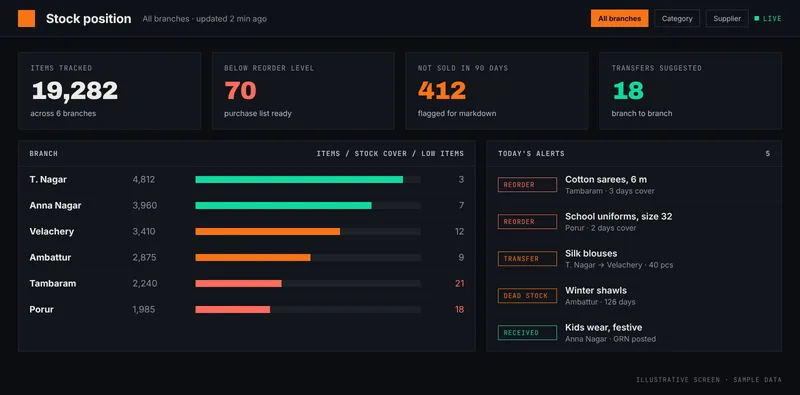
Six branches, six Tally files and a weekly Excel sheet. How one live stock position, reorder alerts and branch transfers replace the Monday phone calls.
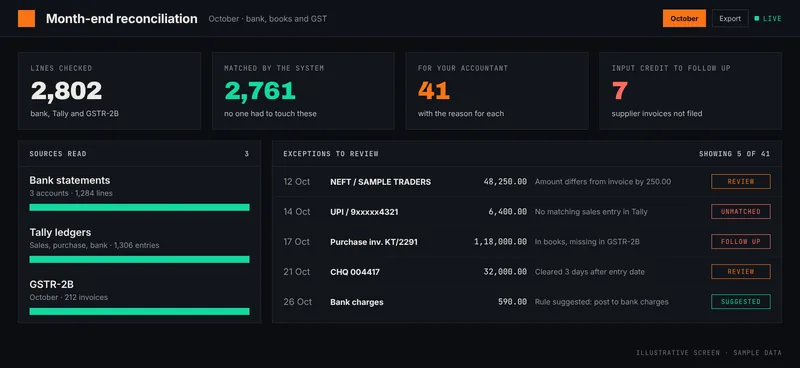
Read the case study →Bank statements, Tally ledgers and GSTR-2B matched by the system. The accounts team reviews a short list of exceptions instead of ticking thousands of lines.
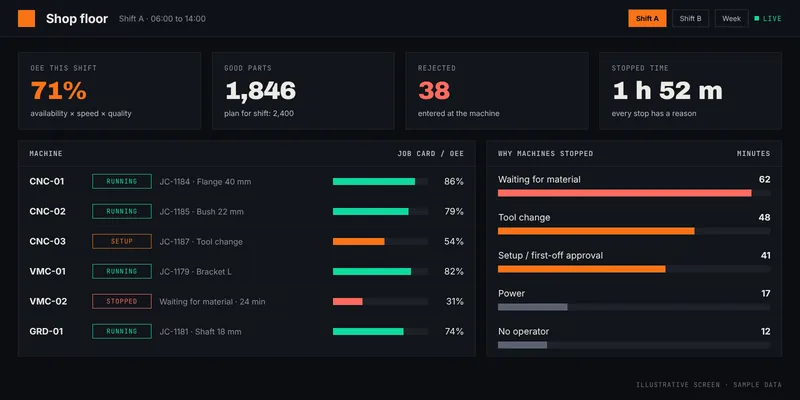
Read the case study →A machine shop that learns about yesterday's production the next morning. Tablet job cards at each machine give the owner live output, rejects and a reason for every stop.
Read the case study →Tell us what your week looks like. Thirty minutes on a call is usually enough to tell whether there is something worth building together. The call is free, and we respond within one business day.